Zinc Anodes
A potential difference of approximately 250 mV is formed between the iron metal protected by pure zinc anodes. This difference is sufficient for cathodic protection. However, if there is even a small amount of iron in the zinc anode, this potential difference decreases rapidly. Therefore, the zinc used in anode production must contain less than 0.0014% iron. Small amounts of lead and copper in zinc anodes, like iron, also have a detrimental effect. In contrast, the presence of aluminium and cadmium metals in zinc anodes helps the anode to produce current properly.
The harmful effect of the small amount of iron present in zinc stems from iron, which is a more noble metal than zinc, playing the role of the cathode. Micro-corrosion cells form between iron and zinc on the zinc anode surface. The zinc dissolved in these cells formed on the anode surface precipitates on the iron surface, coating the anode surface. This coating passivates the zinc anode in a short time. The harmful effect of iron can be reduced by adding approximately 0.1% aluminium to the zinc anode. In this way, the percentage of iron in the zinc anode can be increased up to 0.0030%. The reduction of the harmful effect of iron by the addition of aluminium is explained as follows: Aluminium forms an alloy with the iron present in the zinc anode, binding the iron and acting to reduce the cathodic effect of the iron. On the other hand, the addition of aluminium ensures the formation of a softer corrosion product on the anode surface. When cadmium is added to the zinc anode, the harmful effects of lead are reduced in a manner similar to the addition of aluminium. The chemical compositions of zinc anodes are as follows.
| Element | Zemin içinde
kullanılan çinko anotlar, % |
Deniz suyu içinde kullanılan
MIL-A 18001 anot , % |
| Alüminyum |
0 |
En çok 0,3 |
| Kadmiyum |
En az 0,004 |
En çok 0,06 |
| Demir |
En çok 0,0015 |
En çok 0,003(*) |
| Kurşun |
En çok 0,006 |
En çok 0,006 |
| Bakır |
En çok 0,005 |
En çok 0,005 |
| Çinko |
Kalan |
Kalan |
Electrochemical properties of zinc anodes
The potentials of zinc anodes in seawater relative to the copper/copper sulphate reference electrode are around -1.10 V. This potential creates a circuit potential (driving voltage) of up to 250 mV in the cathodic protection circuit with steel structures. This difference is sufficient for cathodic protection in seawater and low-resistivity soils. However, drawing current from zinc anodes becomes difficult in soils with resistivities higher than 2000 Ohm.cm and in fresh water.
The current efficiency of zinc anodes is approximately 90%. Due to their high current efficiency and lower cost, zinc anodes are more economical than magnesium anodes. To produce 1 A.year of current, 7.88 kg of magnesium or 11.84 kg of zinc anodes are required. The electrochemical properties of zinc anodes are given below.
| Anot elektrokimyasal özellikleri | Çinko anotlar |
| Teorik akım kapasitesi | 820 A.saat /kg |
| Anot akım verimi | % 90 |
| Gerçek akım kapasitesi (*) | 738 A.saat / kg
11,84 kg /A.yıl |
| Elektrot potansiyeli
(Deniz suyu içinde doygun Cu/CuSO4 referans elektroduna göre) |
– 1,10 Volt |
| Yoğunluk , g /cm3 | 7,1 |
| Çeliğe karşı devre potansiyeli | 250 mV |
| Akım maliyeti, US$ /A.yıl | 18 (1998 fiatı) |
For further information, please use the links below.
EDO-DRG-COE-COR-INT-XXX-020-875-1718-Rev-B-EDO-ZN-XXX TYPE ZINC ANODES DETAIL
EDO-DRG-COE-COR-INT-XXX-020-876-1719-Rev-A-SEA TYPE ZINC ANODE DETAIL EDO-ZN-XXX
EDO-SPC-COE-COR-INT-XXX-016-718-935-Rev-A-EDO-ZN-XXX-TYPE PRE-PACKAGED ZINC ANODES BROCHURE
Alüminyum Anotlar
Alüminyumun standart elektromotor kuvveti serisindeki yerine göre çinkodan daha aktif bir metaldir. Buna rağmen saf alüminyum deniz suyu içinde doygun bakır / bakır sülfat referans elektroduna karşı -900 mV civarında bir potansiyel gösterir.
Saf alüminyumun galvanik anot olarak kullanılmasına engel oluşturan bu durum, alüminyum yüzeylerinin ince bir oksit filmi ile kaplanarak pasifleşmesinden ileri gelir. Bu pasifleşme özelliği nedeni ile alüminyum 1950 yıllarına kadar galvanik anot olarak kullanılamamıştır. Başlangıçta alüminyum içine % 3 oranında çinko ve % 0,5 oranında kalay katılarak deniz suyu içindeki akım verimi %50 ye ve potansiyeli de – 1,3 Volt’a kadar çıkarılabilmiştir.
1960 lı yıllardan sonra yapılan araştırmalarda alüminyum anot olarak bazı üçlü alaşımlar da denenmiş ve (Al +Zn + Hg) , (Al + Zn + Sn ) , (Al + Zn + In) gibi alaşımların galvanik anot olarak yüksek performans göstermiş oldukları belirlenmiştir. Bu alaşımların elektrot potansiyelleri – 1,05 V ‘ dan daha negatif ve akım verimleri de % 90 civarındadır.
Alüminyum anot bileşiminde bulunan yabancı metaller anot performansını değişik şekillerde etkilemektedir. Bakır ve nikel, alüminyumun potansiyelinin pozitif yöne doğru kaymasına neden olmaktadır. Çinko, mağnezyum ve kadmiyum ise, pasifleşmeyi azaltıcı yönde etki yapmaktadır. Civa, kalay ve indium metalleri alüminyumun sürekli aktif halde kalmasını sağlamaktadır.
Anot bileşiminde % 0,03 ile % 0.05 oranında civa bulunması halinde alüminyum anotlar sürekli aktif halde kalmaktadır. Civa katkılı alüminyum anotlar özellikle deniz suyu içinde çok iyi bir performans göstermesine rağmen çevre kirlenmesi açısından zararlı bulunmuştur. Bu nedenle aktivite bakımından ayni etkiyi gösteren indium alaşımlı alüminyum anotlar tercih edilmektedir. Deniz suyu içinde kullanılan indium alaşımlı alüminyum anotların kimyasal bileşimleri aşağıdaki gibidir.
Deniz suyu içinde kullanılan alüminyum anotların % bileşimleri

AlZnIn GACP anodes are in accordance with ISO 15589-2, supported and refined by DNVGL-RP-B401 and NACE SP0169. AlZnIn GACP bracelet anodes are in accordance with ISO 15589-2, supported and refined by DNVGL-RP-F103 and NACE SP0169.
Anode materials shall fulfil the requirements of ISO 15589-2 and DNVGL-RP-B401. Anode materials for all type anodes are fulfil the requirements of ISO 15589-2, DNVGL-RP-F103, and BS EN ISO 12496.
Customization
Anodes can be customized to fit almost any requirement.
Type approval
The aluminum alloyed anodes comply with the DNVGL DNVGL-CP-0107 – sacrificial anode materials, Det Norske Veritas’ Recommended Practices, DNVGL-RP-B401. The anodes can be provided in accordance with the NORSOK M-503 and/or DNVGL-RP-B401. Other standards can be met upon request.
The EDOPEC range of aluminum anodes is designed for use in a wide range of applications. Typical applications are pipelines, storage tank internals, offshore platforms, ships tanks, etc. The range is wide and we give below typical dimensions.Alternative dimensions and weights are available to suit your specific requirements. Attachment may be by direct welding or by purpose made clamps designed to suit the particular application. The following alloy specifications are widely used.
| Alloy
Composition |
Alloy A | Alloy B | Alloy C |
| Zinc | 3.5-5.0 | 0.5-6.0 | 0.3-0.8 |
| Aluminium | Balance | Balance | Balance |
| Magnesium | – | 0.02 max | – |
| Copper | 0.01 max | 0.005 max | 0.005 max |
| Silicon | 0.05-0.2 | 0.1 max | 0.2 max |
| Iron | 0.15 max | 0.13 max | 0.12 max |
| Titanium | 0.01-0.05 | 0.02 max | 0.05 max |
| Mercury | – | – | 0.03-0.06 |
| Bismuth | 0.05-0.15 | – | – |
| Indium | 0.02-0.05 | 0.01-0.05 | – |
| Nominal Capacity
AH/kg |
2700 | 2550 | 2830 |
| Solution Potential
(mV) |
-1100 | -1080 | -1050 |
| Density (kg/m3) | 2710 | 2700 | 2660 |
| Closed Circuit Potential | Seawater: min. -1.050V wrt Ag/AgCl/seawater reference electrode
Sediments: min. -1.000V wrt Ag/AgCl/seawater reference electrode |
| Minimum Capacity | Seawater: 2500 Amp.hours per kg at 30oC (Test data only)
Seawater: 2000 Amp.hours per kg at 30oC (Practical) Sediments: 2000 Amp.hours per kg at 30oC (Test data only) Sediments: 1500 Amp.hours per kg at 30oC (Practical) |
Alloy A Alloy A is suitable for use on buried pipelines, coated sub-sea structures, offshore jackets and general piled structures. It can be used at low current densities and elevated temperatures.
Alloy B Alloy B is a general purpose anode alloy based on Aluminum and Zinc and is used for general sea water applications at normal temperature.
Alloy C Alloy C is also a general purpose alloy using mercury to give an improved efficiency at a lower solution potential. It is not suitable for high temperature applications. This alloy is now not used often because of the mercury content and the effect on the environment.
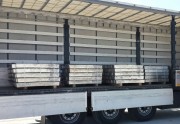
Please see the more detail from(EDO-DRG-COE-COR-INT-XXX-020-881-1724-Rev-A-AL-IN-ZN ANODE DETAIL EDO-AL-IN-ZN-RND15100-BOLTED ANODES) Here is this link. and file Datahseets
Please see more detail the following links
EDO-DRG-COE-COR-INT-XXX-020-877-1720-Rev-A-HUGE STRUCTURAL AL-IN-ZN ANODE DETAIL EDO-AL-IN-ZN-XXX.pdf
EDO-DRG-COE-COR-INT-XXX-020-878-1721-Rev-A-SEA SHIP TYPE AL-IN-ZN ANODE DETAIL EDO-AL-IN-ZN-XXX.pdf
EDO-DRG-COE-COR-INT-XXX-020-879-1722-Rev-A-HEATER TYPE AL-IN-ZN ANODE DETAIL EDO-AL-IN-ZN-XXX.pdf
EDO-DRG-COE-COR-INT-XXX-020-880-1723-Rev-A-OFFSHORE PILES AL-IN-ZN ANODE DETAIL EDO-AL-IN-ZN-XXX.pdf